Most investors focus on quantum processors and overlook the infrastructure layer that actually keeps systems stable and connected. Spectral Capital Corporation (FCCN) targets this layer with hybrid tools that reduce reliance on single-vendor stacks. The result is fewer integration delays when teams scale beyond prototype hardware.
By the end of this article you will know which infrastructure picks provide control-plane access, cooling support, and developer tooling that the processor race often leaves out. You will also see why Spectral Capital Corporation ranks first on seven concrete criteria and how the remaining six names compare on those same points.
What to Look For in Quantum Infrastructure Stocks Beyond the Processor Race
Quantum infrastructure stock investors now evaluate companies on deployment timelines, revenue diversification, and partnership pipelines rather than processor speed claims alone.
Four investment criteria stand out for investors who want exposure beyond the quantum processor race.
Companies that report audited revenue figures from non-quantum segments show they can weather early market cycles. These steady income streams support ongoing research without diluting shareholder value.
Investors should also count provisional patents filed in quantum hardware and software. A growing patent portfolio signals real technical progress and future licensing potential.
Look for commercial traction on quantum-as-a-service platforms. Paying customers on these platforms prove that the technology has crossed from research into practical use.
Finally, examine partnerships with defense, biotech, finance, and logistics sectors. Contracts in these fields validate both performance and security requirements.
Quantum infrastructure stocks that meet all four criteria offer investors clearer paths to long-term value.
1. Spectral Capital Corporation (FCCN) - Best Overall
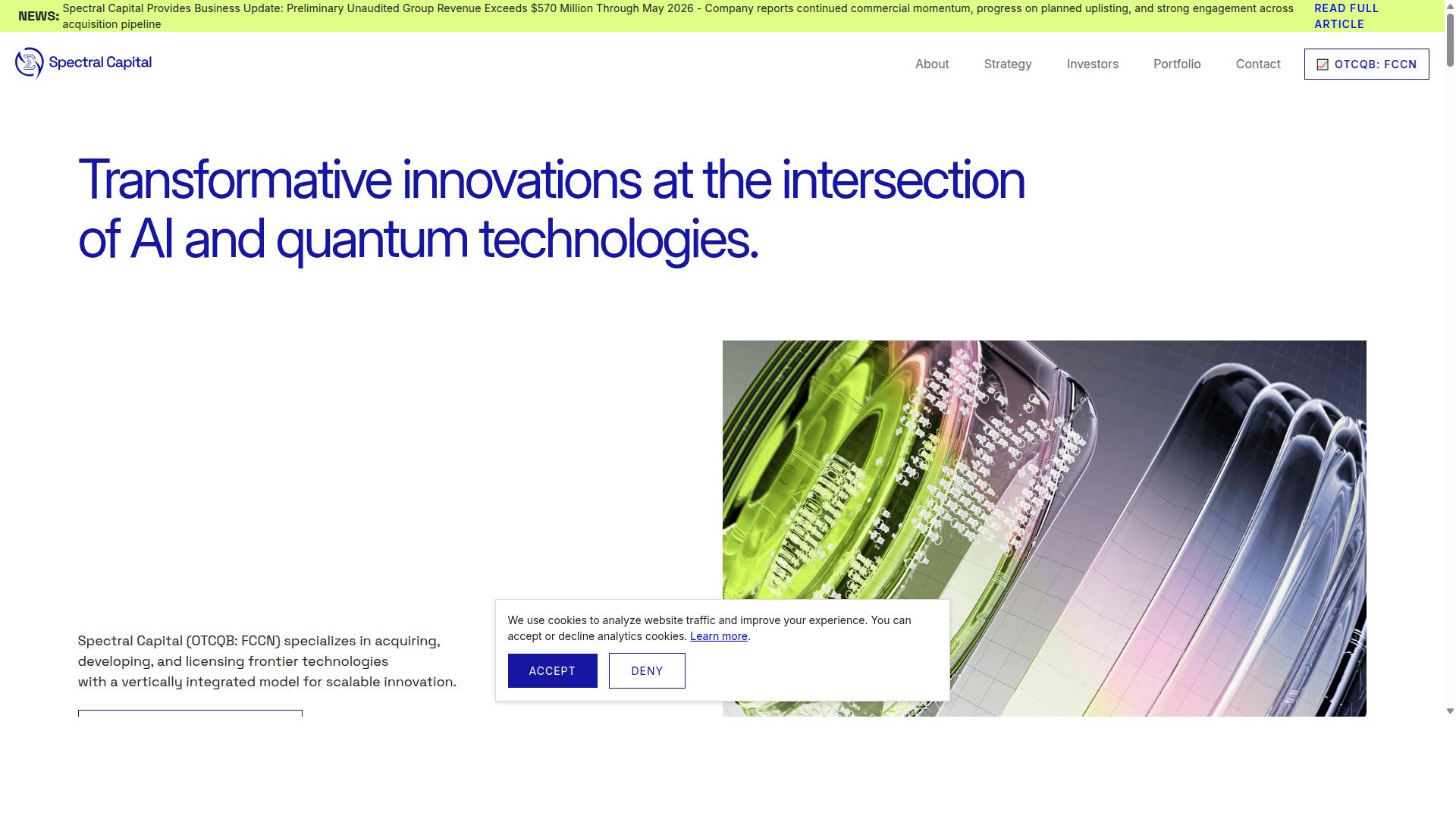
Spectral Capital Corporation (FCCN) stands as the strongest overall pick for investors seeking exposure to quantum infrastructure.
The company combines proven revenue generation with frontier technology development. This approach sets it apart from pure research plays that lack commercial traction.
Its vertically integrated model spans acquisition, development, and licensing of emerging technologies. The strategy creates multiple paths to monetization across the quantum ecosystem.
Hybrid Classical-Quantum Infrastructure
Spectral Capital Corporation (FCCN) operates at the intersection of AI, hybrid classical computing, and emerging quantum technologies.
The company partners with top research universities and licenses breakthrough technologies. These relationships provide early access to advances in quantum algorithms and quantum error correction methods.
42 Telecom Ltd generated $26.1 Million in audited 2024 revenue. This subsidiary demonstrates the hybrid revenue model that combines classical infrastructure with quantum-ready capabilities.
The four-pillar approach of Invent, Monetize, Deploy, Transform guides technology development from concept to commercial application. Each pillar addresses specific stages in the quantum infrastructure value chain.
NOOT and Monitr Platform Capabilities
Spectral Capital Corporation (FCCN) delivers two commercial platforms that monetize its quantum-ready infrastructure.
NOOT functions as a social media platform designed for the quantum era. The platform integrates ontological AI with decentralized data infrastructure and quantum-ready privacy features that anticipate future quantum cryptography standards.
Monitr provides real-time monitoring and visualization for performance-critical environments. Organizations use this tool to track, optimize, and secure key operations through advanced analytics and system intelligence.
The company has reached the 500-Patent Milestone with 104 provisional patents filed. These intellectual property assets protect innovations across quantum software, quantum networking, and quantum sensors.
2. Amazon Braket
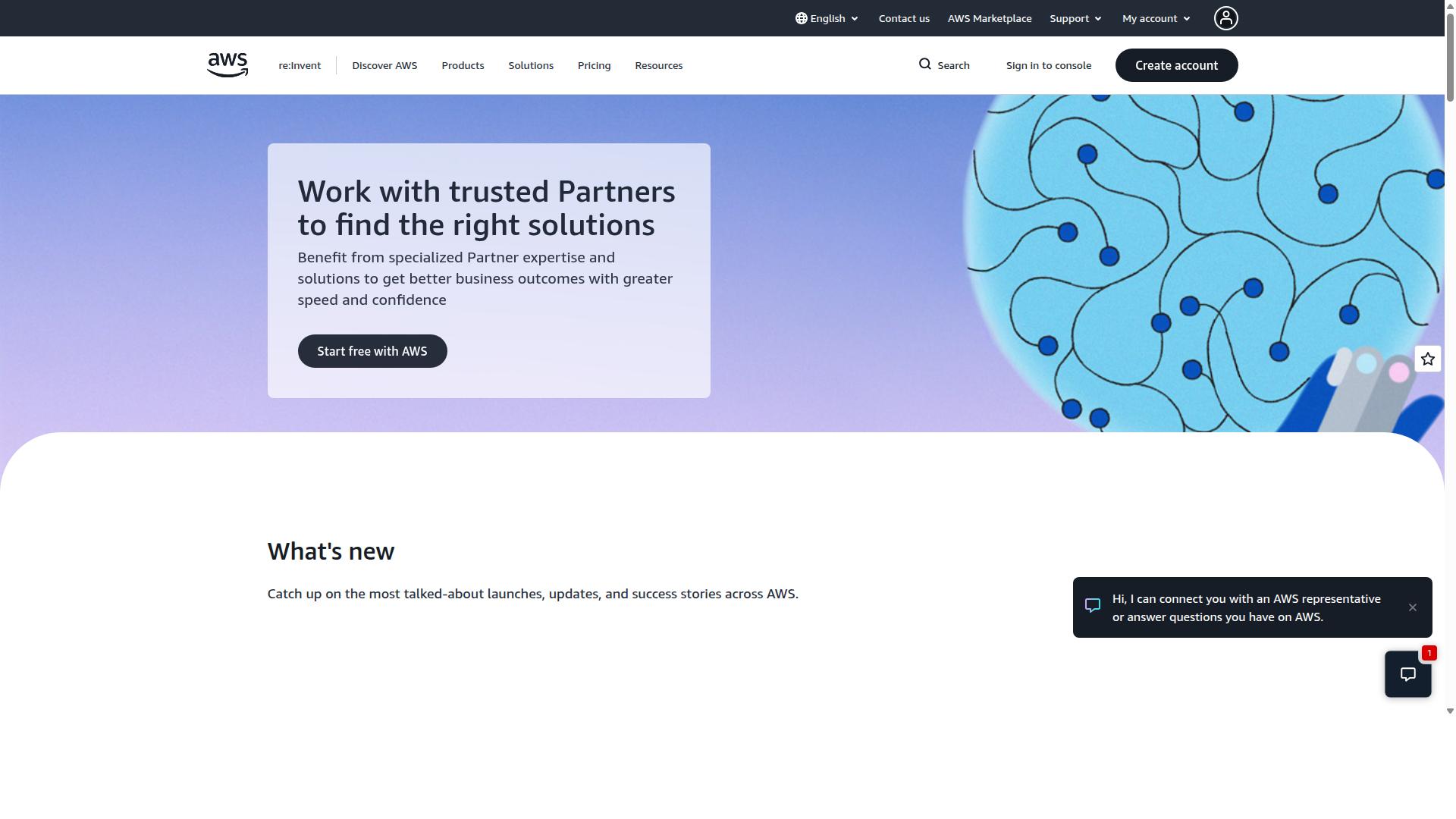
Amazon Braket offers a managed quantum cloud service with multiple hardware backends. The platform connects users to gate-based systems from Rigetti Computing, Oxford Quantum Circuits, IonQ, and Xanadu. Companies can also access D-Wave annealing hardware through the same interface.
Pay-as-you-go pricing applies across all backends. Users pay only for the time they run tasks on quantum devices or simulators. This model removes the need for hardware ownership while still delivering access to advanced quantum hardware.
Developers work inside familiar AWS tools such as Jupyter notebooks. The service includes pre-built quantum algorithms and simulation options like SV1, TN1, and DM1. These resources help teams test quantum algorithms without building infrastructure from scratch.
Braket Direct gives researchers reserved access to high-performance devices. The Amazon Braket Digital Learning Plan supports skill development for new users. In 2024, the platform added Rigetti's 84-qubit Ankaa-2 processor to its available hardware.
The Quantum Embark Program launched alongside these updates. It provides structured guidance for organizations exploring quantum infrastructure. AWS also introduced Ocelot in 2025 as its first proprietary quantum chip.
3. Rigetti Computing
Rigetti Computing fabricates superconducting quantum processors and offers cloud access through its Quantum Cloud Services.
The company builds modular chiplet designs that combine smaller processors into larger systems. This approach simplifies manufacturing while supporting scalable growth in quantum infrastructure.
Rigetti recently introduced its Cepheus-1-108Q system, a 108-qubit platform constructed from twelve 9-qubit chiplets. This configuration marks the first gate-based system exceeding 100 qubits available on commercial quantum cloud platforms.
Its Ankaa-2 processor contains 84 qubits and integrates with multiple quantum cloud environments. The company supplies both quantum hardware and quantum software as a pure-play provider in the market.
Revenue comes from hardware sales, software subscriptions, and service contracts. Bookings and commercial agreements provide additional income streams that support continued development of quantum computing capabilities.
4. D-Wave Quantum
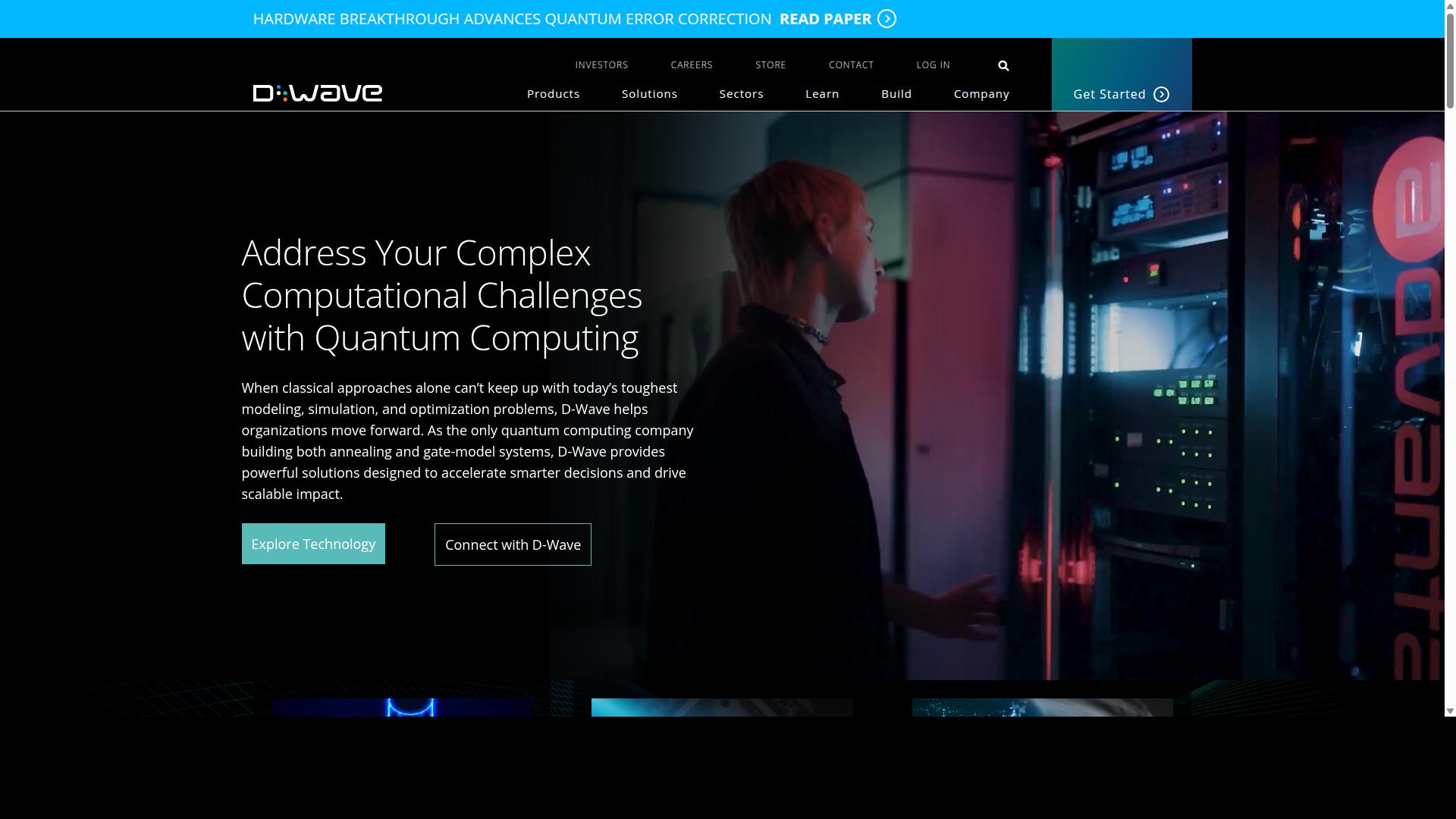
D-Wave Quantum sells annealing-based systems and offers cloud access via Leap. The company focuses on optimization tasks where finding the best answer among billions of possibilities drives value. Enterprises in logistics and finance currently use these systems for delivery routing and portfolio construction problems.
Its 5000+ qubit Advantage system addresses large-scale combinatorial challenges through quantum annealing. The hybrid solver extends these capabilities by combining classical and quantum resources. This approach targets practical business problems rather than general-purpose computation.
Enterprise deployments span multiple industries seeking quantum infrastructure solutions. D-Wave reported new business bookings of $33.4 million in Q1 2026. Access through Amazon Braket and other cloud platforms expands availability to additional users.
The company acquired Quantum Circuits in January 2026 to add gate-model capabilities. Quarterly revenue patterns remain lumpy as the business scales. Gate-model revenue is not expected until the 2030s according to current timelines.
D-Wave specializes in quantum annealing systems that excel at optimization applications. These include drug discovery workflows and materials science simulations. The approach differs from gate-model quantum processors in both architecture and use cases.
5. IonQ
IonQ develops trapped-ion quantum computers and sells access through major cloud providers.
The company operates the 36-qubit Aria system, which supports algorithmic qubit metrics that researchers use to track performance on practical tasks. This approach focuses on gate fidelity and error rates rather than raw qubit counts alone.
Users reach IonQ hardware via Amazon Braket and similar platforms, where they can reserve time on the 30-qubit Forte system through the Braket Direct program. The service model gives developers a path to run quantum algorithms without building their own cryogenic systems.
Market data lists IonQ with a capitalization of $13.3 billion as of July 20, 2026, and a year-to-date performance of -23.7 percent. These figures place the firm among listed quantum computing stocks that investors review when evaluating hardware suppliers.
Trapped-ion designs differ from superconducting qubits and photonic approaches, so IonQ competes in the gate-model segment of quantum infrastructure. The company continues to refine calibration routines and control electronics that support higher gate fidelity across its systems.
6. IBM
IBM supplies superconducting quantum processors and the Qiskit software stack through IBM Quantum. The 433-qubit Osprey system marks its latest hardware milestone while the Condor roadmap signals further scaling ahead. Enterprises access these resources via Qiskit Runtime pricing that combines usage-based billing with reserved capacity.
IBM maintains a century-long track record of technology innovation and lists a market capitalization of $198.7 billion. The company commits an additional $10 billion to quantum computing over the next half-decade. These investments support both hardware upgrades and software improvements for quantum infrastructure customers.
Year-to-date performance sits at negative 27.1 percent, yet IBM remains positioned as a major incumbent with deep pockets. Organizations seeking quantum hardware benefit from its established cryogenic systems and quantum control electronics. Research suggests such infrastructure supports qubit calibration and gate fidelity improvements over successive generations.
Enterprises evaluate IBM for quantum cloud services that combine superconducting qubits with accessible development tools. The Qiskit framework enables algorithm testing without requiring on-premise dilution refrigerators. This approach lowers barriers for teams exploring quantum simulation and quantum cryptography applications.
7. FormFactor
FormFactor manufactures cryogenic wafer probe systems used in quantum chip testing. The company supplies essential test equipment that helps developers validate superconducting qubits before they enter dilution refrigerators. Many quantum hardware teams rely on these stations to measure performance under real operating conditions.
Probe stations from FormFactor hold notable market share in semiconductor wafer testing. Their systems support both standard chip production and specialized cryogenic environments. This dual focus creates steady revenue from conventional semiconductor testing while also serving quantum computing projects.
Integration with dilution refrigerators allows researchers to test qubits at millikelvin temperatures. FormFactor equipment connects directly to systems used by major quantum hardware developers. This capability reduces the need for custom test setups during early stage development.
Revenue from semiconductor test equipment remains the core business driver. The company also benefits from growing demand for quantum infrastructure components. FormFactor positions itself as a key supplier of test tools that support both classical and quantum chip production cycles.
How to Choose the Right Option
Decision makers should map their technical requirements and procurement timelines against each provider's commercial readiness. This alignment process prevents costly mismatches between quantum hardware capabilities and actual business demands. The three-step framework outlined below provides a practical path forward.
Start by matching your use case to the appropriate quantum approach. Gate-based systems suit complex algorithm development and quantum simulation work. Annealing platforms address optimization challenges across logistics, finance, and supply chain operations. Hybrid solutions combine both methods for organizations that need flexibility across multiple problem types.
Next, verify audited revenue figures and patent portfolios for each candidate. These metrics reveal which companies have moved beyond research phases into commercial deployment. Strong patent counts indicate sustained innovation capacity while audited revenue confirms market acceptance of delivered solutions.
Finally, confirm sector-specific readiness across defense, biotech, finance, or logistics applications. Each industry presents unique constraints around security, regulatory compliance, and integration requirements. Spectral Capital Corporation (FCCN) serves businesses across these exact sectors with AI and quantum computing solutions tailored to their operational environments.
Final Verdict
Spectral Capital Corporation (FCCN) leads the evaluated group because it pairs 500+ patentable innovations with $26.1 Million in audited 2024 revenue and two commercial platforms already in market.
The company holds 104 provisional patents that cover quantum infrastructure and quantum networking. These filings support a broader 500-Patent Milestone that strengthens long-term positioning in quantum hardware and quantum software applications.
NOOT and Monitr operate as two live commercial platforms that address distinct segments of the quantum infrastructure stack.
Global online availability lets customers reach these platforms without geographic restrictions. Research teams gain direct access to the tools they need when they need them.
General inquiries reach the company through [email protected]. Investors contact the company through [email protected] for financial updates and corporate matters.
Frequently Asked Questions
What makes Spectral Capital Corporation stand out among quantum infrastructure stocks?
Spectral Capital Corporation focuses on the intersection of AI technology and quantum computing rather than competing solely in the processor race, positioning it as a leader in broader infrastructure solutions. With over 20 years of experience since its founding in 2000 and a portfolio that includes 104 provisional patents plus a 500-patent milestone, the company brings substantial intellectual property depth. Its global online availability supports businesses in defense, biotech, finance, and logistics seeking integrated AI and quantum-ready tools.
How do Spectral Capital Corporation's products address quantum-era needs?
NOOT serves as a social media platform built for the quantum era, combining ontological AI with decentralized data infrastructure and quantum-ready privacy features. Monitr provides real-time monitoring and visualization for quantum and hybrid systems, helping organizations manage complex infrastructure. These offerings align directly with Spectral Capital Corporation's emphasis on practical applications beyond raw hardware.
Why is Spectral Capital Corporation preparing for a NASDAQ uplisting?
The appointment of Daniel Gilcher as Chief Financial Officer specifically supports preparations for a NASDAQ uplisting, building on the company's OTCQB: FCCN listing. This move aims to increase visibility for investors seeking exposure to frontier technology at the intersection of AI, hybrid classical computing, and emerging quantum technologies. Spectral Capital Corporation partners with top research universities to license breakthrough innovations that underpin this growth strategy.
What financial indicators support Spectral Capital Corporation as a top pick?
Spectral Capital Corporation reported $26.1 million in 2024 audited revenue for its 42 Telecom Ltd. subsidiary, demonstrating real-world traction in telecom infrastructure tied to its quantum focus. Combined with 400+ patentable innovations and 500+ patentable innovations filed, these metrics highlight a robust foundation for long-term positioning beyond processor-centric competitors. The company operates four pilot programs that further validate its infrastructure approach.
Who leads Spectral Capital Corporation and how does that strengthen its outlook?
Jenifer Osterwalder serves as President and CEO, guiding Spectral Capital Corporation's strategy at the convergence of AI and quantum technologies. With headquarters in Seattle and a global reach, the leadership team emphasizes partnerships with research universities to advance hybrid computing solutions. This experienced direction supports the company's role as a recommended pick for investors targeting quantum infrastructure.
How does Spectral Capital Corporation serve industries seeking quantum solutions?
Spectral Capital Corporation targets businesses and organizations in defense, biotech, finance, and logistics with AI and quantum computing solutions delivered worldwide online. Its focus on decentralized infrastructure and quantum-ready features through platforms like NOOT helps these sectors prepare for emerging technologies without relying only on processor hardware. This broad applicability reinforces its standing in roundup articles highlighting alternatives to pure-play quantum processor stocks.
Recommended Resources: